Category: Bookkeeping

  • Material Cost Variance Accounting for Managers

    The standard material usage is set at 10 feet of wood per chair, which costs $5 per foot. If the variance is negative, it means that the company used fewer materials than expected, which is considered favorable as it suggests better efficiency. By addressing production volume variance through these lenses, companies can create a more resilient and profitable manufacturing process. This delicate balance is often disrupted by production volume variance, which occurs when the actual number of units produced deviates from the expected volume.

    How to analyze material variances

    Conversely, an unfavorable MPV indicates higher costs than planned, prompting an investigation into causes such as supplier price increases or poor purchasing decisions. Material Price Variance (MPV) is calculated to assess the impact of paying a different price for materials than what was anticipated. You can also use them to revise and update your standard costs and budgets, and to set realistic and achievable goals and targets.

    Interpretation of Material Variance

    The material usage variance is usually expressed as a percentage or a monetary value, which can be either favorable (if actual usage is less than standard) or unfavorable (if actual usage is more than standard). These variances can be either favorable or unfavorable, depending on whether the actual material usage is less than or more than the standard. The standard material usage is typically determined during the budgeting process, and any deviations from this standard are reported as variances. Effective management of material usage variance is essential for maintaining competitive advantage in today’s fast-paced and cost-conscious business environment.

    • The environmental cost of producing, storing, and disposing of these garments was significant, highlighting the sustainability challenges posed by production variance.
    • It highlights discrepancies between the actual quantity of materials used and the expected quantity based on production standards.
    • Sometimes, cheaper materials require higher usage quantities.
    • This variance can be further analyzed to understand its causes.
    • A usage variance can be stated in terms of the number of units differential.
    • Equipment failure – equipment failure is another common cause of yield variance.

    Interpreting and acting on variance results 🔗

    Taking this information to management might be a bit uncomfortable if the first scenario happens, right? Both are important and are used to calculate the overall spending variance. Therefore, tracking and managing this variance is not only essential for internal operations but also plays a critical role in shaping market strategies. Moreover, technology can facilitate better forecasting and inventory management practices. Utilizing advanced software solutions, such as Enterprise Resource Planning (ERP) systems, allows organizations to track material consumption in real time.

    This prompts an investigation into possible causes, such as price fluctuations, low-quality materials, or production errors. By keeping a close eye on material variance, businesses can make informed decisions to optimize their production processes and improve profitability. By analyzing material variance, companies can identify discrepancies in purchasing prices, usage rates, and waste levels, which can all impact the bottom line. It represents the difference between the standard, or expected, cost of materials and the actual cost incurred. Equipment failure, a breakdown on a production line or a glitch in the operation of a vital machine that results in spoilage or destroyed materials also can have an unfavorable effect on the variances.

    However, if the actual usage of steel is higher than anticipated due to inefficient cutting processes, the PPV could turn unfavorable despite the lower purchase price. If actual usage types of bank accounts exceeds the standard, PPV will be unfavorable, indicating potential inefficiencies or waste. By analyzing material usage patterns and their effects on PPV, businesses can identify opportunities for cost savings and more strategic purchasing decisions. Construction materials must meet safety standards, which might necessitate the use of higher-grade, and possibly more, materials. By considering the insights from various stakeholders and implementing best practices, manufacturers can achieve a balance between cost efficiency and product quality. It refers to the quantity and type of materials employed in the creation of a product.

    Let’s consider a company that manufactures wooden chairs. Understanding the composition, needs, and behaviors of a company’s customer base is a cornerstone… Systemically important financial institutions (SIFIs) are those that, due to their size,… It requires a comprehensive approach that considers operational, financial, and supply chain factors. Financial analysis also plays a crucial role in optimizing production.

    Financial analysts, on the other hand, appreciate the ability to more accurately forecast expenses and reduce financial waste. These devices can track the flow of materials with great accuracy, providing a continuous stream of data that can be analyzed to optimize usage. From the perspective of operational management, the integration of iot devices and sensors into production lines has been a game-changer.

    Products

    A weakening domestic currency against the dollar could increase the cost of imported plastics. Were there purchasing discounts or price fluctuations? This could be higher or lower than the standard. To highlight these concepts, consider a company manufacturing bicycles.

    They serve as indicators of how well resources are being utilized and can pinpoint areas where waste is occurring or where efficiencies can be gained. The resulting information is used by the production manager and purchasing manager to investigate and correct problems. Let us assume further that during given period, 100 widgets were manufactured, using 212 kg of unobtainium which cost €13,144.

    The variance between actual and expected costs of materials used in production is measured using material cost variance and material usage variance in cost accounting. ➦ The concept of material usage variance refers to the difference between the actual usage of materials in the production process versus the standard usage based on the amount of output produced. When analyzed together, material usage and volume variance can reveal insights into production efficiency, cost control, and the potential need for process improvements. Understanding the intricacies of material usage and its impact on volume variance is pivotal for businesses that aim to optimize their production processes and cost-efficiency. Conversely, an unfavorable material usage variance arises when the actual quantity of materials used exceeds the standard quantity allowed. A favorable material usage variance occurs when the actual quantity of materials used is less than the standard quantity allowed.

    By dissecting the components of direct material costs, companies can pinpoint inefficiencies and overages that may not be immediately apparent. If a product was supposed to use 2 kg of material per unit but ends up using 2.5 kg, for a batch of 500 units, the quantity variance would be 250 kg unfavorable. This variance can stem from a multitude of factors, including fluctuating market prices, supplier negotiations, and inventory management inefficiencies. Managing and reducing material variance is a complex challenge that requires a holistic approach. A toy producer could use ABC to assign utility costs to different product lines based on machine hours, offering a clearer picture of material-related expenses.

    Module 10: Cost Variance Analysis

    For example, a sudden increase in the demand for steel might lead to higher prices, thus affecting the material variance. Understanding these factors is essential for managers and accountants alike, as they strive to control costs, optimize purchasing strategies, and improve production processes. Was there waste or inefficiency in the production process? By analyzing material variance, companies can pinpoint areas where they may be overspending on raw materials or not utilizing them efficiently. If the company decides to use a mix of steel and aluminum to reduce costs, analyzing the mix variance becomes essential.

    Standard Cost of Actual Quantity

    • By understanding and managing these variances, businesses can maintain a competitive edge in their respective markets.
    • Human error – Human error is another factor that can contribute to yield variance.
    • In the realm of production and manufacturing, variance is not just a statistical measure; it’s a real-world phenomenon with tangible consequences.
    • Knowing the variance in quantity of materials budgeted versus the actual amount used to provide a service or make a product shows the effect the variance has on the final cost.
    • Using high-quality materials may be more expensive, but it can ultimately lead to a better return on investment due to lower variance and increased yields.
    • When material costs fluctuate due to high variances, companies may need to reevaluate their pricing strategies to maintain profitability.

    It can influence decisions related to production planning, inventory management, and supply chain optimization. The key lies in continuous improvement and adaptability, ensuring that material management practices evolve in tandem with the changing business environment. For instance, a furniture manufacturer might use recycled materials to both lower expenses and appeal to environmentally conscious consumers. The use of RFID tags and automated reordering systems can both reduce labor costs and prevent stockouts. It involves a comprehensive analysis of the lifecycle costs, including maintenance, durability, and disposal.

    There can be either a price variance or a quantity variance, but there can also be a combination that creates the spending variance. So we had a quantity variance and a price variance. Now we would still need to purchase 15,625 units, but at a cost of $1.25/unit so $19,531.25 would be our total spent on direct materials.

    Audience activation is the process of turning your passive audience into active participants in… For example, a furniture manufacturer might discover that a significant portion of wood is wasted due to inefficient cutting patterns. An example here could be the implementation of a ‘Just-in-Time’ inventory system, which reduces excess stock and minimizes waste due to spoilage or obsolescence. It’s a delicate balance to maintain optimal inventory levels while minimizing cost has anyone used valpak to advertise discrepancies. An automotive assembly plant might synchronize its component deliveries with its production schedule to avoid overstocking parts.

  • Accounting Services for Lawyers & Attorneys CPA Firm Nashville TN

    law firm bookkeeping in tennessee

    Our bookkeeping services include meticulous management of trust accounts, ensuring compliance with state and federal regulations. When you work with CPN Legal, you can feel confident that our team of CPAs, bookkeepers, controllers, and industry experts understands the challenges you face. This approach is why so many law firms have trusted us How Bookkeeping for Law Firms Strengthens Financial Health to serve as their back office management. At Better Bookkeepers, we offer more than just bookkeeping services; we offer peace of mind. Our remote, nationwide bookkeeping services are tailored to meet the unique needs of law firms, ensuring compliance, accuracy, and financial optimization. Transparent financial activity provides the necessary data to support planning and budgeting.

    law firm bookkeeping in tennessee

    Accounts Receivable Supervisor jobs

    Running a business in Knoxville, TN comes with many financial responsibilities. At Clarigro, we offer professional bookkeeping services tailored to meet the needs of businesses. Our services of accounting Knoxville TN are perfect for small businesses, startups, and growing enterprises that require reliable and accurate financial management solutions. For small business owners in Knoxville, we offer bookkeeping services for small business to help manage day-to-day financial tasks.

    law firm bookkeeping in tennessee

    Nashville Bookkeeping Services

    • At CBIZ, we turn challenges into opportunities with tailored solutions and deep industry insight.
    • Our team takes the time to deeply understand your business, answer your questions, help you link your accounts, and show you how Bench works.
    • By offering tailored onsite bookkeeping services Nashville firms can trust, we provide hands-on support without the cost or commitment of hiring a full-time employee.
    • Clarigro has a solid reputation for helping local businesses in Knoxville optimize their financial operations.
    • When initiating client interactions, signing service agreements, and sending invoices, such businesses face financial obligations that require constant oversight.
    • Companies with clear financial activity can rationally manage budgets, allocate resources appropriately, and avoid negative cash flow.

    CBIZ explores how businesses can leverage technology to improve efficiency, enhance security, and drive growth. The CBIZ Tariff Solution delivers integrated support across finance, tax, operations, and trade strategy. Your destination for informed insights, strategic analysis, and proactive tax planning guidance. Just fill out our form with your information and we’ll contact you with ways to help secure your finances, save money on taxes, help with your business and more.

    Trusted Bookkeeping for Law Firms Nationwide

    Our goal is to free you up to focus on practicing law by providing accounting support that strengthens your practice https://www.yuks.co/law/the-primary-aspects-of-bookkeeping-for-law-firms/ at every level. Our commitment to delivering exceptional customer service and support is unwavering. We view ourselves as an extension of your team, and your success is our top priority. Discover how we can help you have better finances with a personalized demo from a Bench expert, ready to answer all your questions. Each month, your bookkeeper organizes your business transactions and prepares financial statements.

    Contact Us About Our Law Firm Accounting Solutions in Nashville, TN Today

    • From transaction recording and financial reporting to detailed financial analysis and business strategies, we handle the details so you can focus on growing your business.
    • This activity helps determine revenue levels, key expenditures, and the most profitable services.
    • Our tax and bookkeeping services in Tennessee specialize in real estate, e-commerce, law firms, CPA firms, healthcare, agencies, and startups.
    • This frees up attorneys to focus on legal work while reducing the chances of errors or compliance issues.
    • Overall, outsourced law firm accounting ensures that the firm has better control over cash flow and financial stability.
    • We offer a hassle-free QuickBooks Online set-up, customized to fit the specific requirements of your law firm.

    We’ll begin with an in-depth consultation to gather information about your goals and industry to determine if our services fit your needs. Keeping your focus on the long- and short-term strategy of your business or nonprofit is key to achieving longevity, and having reliable financials is crucial to aid in effective planning. Our CPAs will work with you to meet you at whatever level of assistance you require. Whether you want fully outsourced accounting and bookkeeping or want to integrate specific services into your existing processes, our experienced team will make the transition seamless. By working with a specialized accounting partner, law firms can get accurate financial reporting, better cash flow control, and reliable compliance. Without strong financial management, law firms’ growth potential is limited.

    law firm bookkeeping in tennessee

    Page 6 – Software Stack

    Our team understands the specific needs of law firms and delivers reliable, compliant, and customized solutions to keep your practice running smoothly. Our services are exclusively remote, allowing us to serve law firms nationwide. Bench is proud to offer bookkeeping services to businesses across the United States.

    law firm bookkeeping in tennessee

    Tennessee generally allows one year to file personal injury claims. This means most injured people must start their case within twelve months of the crash. In limited situations tied to criminal charges, this period may extend. Missing the standard deadline can still block recovery, even when injuries are serious. Legal deadlines can arrive faster than many people expect after a serious truck crash.

  • Bad and Doubtful Debts in Ledger Accounting

    You then already record a loss in the income statement, while setting aside a provision on the balance sheet. You reduce your asset position with an estimate of this potential loss, giving your financial statements a more accurate picture. For businesses this is an important concept, as it directly impacts cash flow and the annual financial statements. By performing detailed credit checks before extending credit, they can assess the customer’s ability to pay and set appropriate credit limits. By staying informed about these external factors, companies can make informed decisions regarding their allowance.

    Common Errors in Accounting for Bad and Doubtful Debts

    Companies should assess industry-specific factors, such as competition, regulatory changes, and technological disruptions, to tailor their approach to determining doubtful debts. The broader economic landscape plays a crucial role in influencing doubtful debts. For instance, if a customer has a history of delayed payments or financial struggles, it raises concerns about the recoverability of outstanding amounts. One fundamental aspect to weigh is the creditworthiness of customers. Let’s delve into the key considerations when assessing doubtful debts.

    Uncertainty surrounds the financial world, and the accounting world is no exception. A month later, ABC knows that a $1,500 invoice is indeed a bad debt. The debit in the transaction is to the bad debt expense.

    One widely used method for estimating bad debt is the aging of accounts receivable. Conversely, during economic downturns or recessions, the likelihood of bad debts increases due to lower consumer spending and financial instability. Companies should assess their customers’ financial status regularly and adjust the provision accordingly to reflect any changes in credit risk.

    Without this provision, the financial statements would not provide a fair representation of the company’s finances. Second, it helps in presenting a more accurate picture of the company’s financial health, making it crucial for investors, creditors, and other stakeholders. By recognizing potential losses early, it prevents the company from overstating its assets and income. Provision for doubtful debts is essential for several reasons. Understanding provision for Doubtful debts Economic conditions change, customer payment patterns evolve, and the receivables balance fluctuates.

    To reflect this possible loss, ABC Enterprises creates a provision for doubtful debts. One year later, XYZ Ltd. unexpectedly receives $2,000 from John’s Electronics as a partial payment of the previously written-off bad debt. Writing off a bad debt does not necessarily mean the business has failed in credit management. Since the debt is now confirmed as uncollectible, XYZ Ltd. must remove it from accounts receivable and record it as an expense. Below are practical examples of bad and doubtful debts and their journal entries, presented with extended context and applied knowledge.

    How to account for doubtful debt (step-by-step)

    Thus, the net impact of the provision for doubtful debts is to accelerate the recognition of bad debts into earlier reporting periods. At the end of each accounting period, the provision for doubtful debts should be reviewed and adjusted based on new information or changes in the credit environment. A provision for doubtful debts is an estimate of the amount of accounts receivable that may not be collected. By accounting for doubtful debts, companies provide a more accurate and realistic view of their financial health. During the review process, they identify What Is The Difference Between Financial And Real Assets a higher risk of bad debt due to customers facing financial difficulties.

    Managing Provision for Doubtful Debts in Ledger Accounting

    For example, if a customer is facing temporary financial constraints, businesses can consider offering flexible payment terms or customized solutions to prevent bad debt from occurring. For example, if a certain percentage of customers historically defaulted on their payments, this information can be used to estimate the provision for doubtful debts for future periods. However, determining the appropriate provision for doubtful debts can be a complex task, as it depends on several factors that influence the likelihood of bad debts occurring. This provision is an allowance set aside to cover potential losses from customers who may default on their payments. When it comes to financial management, one crucial aspect that businesses must consider is the allowance for bad debt. Businesses can leverage advanced software and analytics tools to identify potential bad debt risks, track customer payment behavior, and optimize collection processes.

    E. Updated Provision for Doubtful Debts Ledger

    • This transaction doesn’t affect individual customer accounts—every customer still officially owes its full balance.
    • Management may use their expertise and experience to estimate doubtful debt.
    • Reporting and disclosure requirements for the allowance for bad debt play a crucial role in ensuring transparent financial reporting.
    • When the allowance is subtracted from accounts receivable, the remainder is the total amount of receivables that a business actually expects to collect.
    • Investors might view the provision as a conservative estimate, potentially undervaluing the company’s earnings and future prospects.

    In accounting, a normal balance refers to the side of an account that shows increases, which will either be on the debit side… Financial modelling tools can assist in generating accurate financial reports by automating the calculations and adjustments needed for doubtful debt. A financial modelling tool can incorporate the estimated doubtful debt into cash flow projections. They can take into account qualitative factors, such as economic conditions or industry trends that may impact the collectability of accounts receivable. This can provide a benchmark against which a company can compare its own experience and estimate doubtful debt. Research industry-specific data or benchmarks regarding bad debt percentages.

    • Each method has its advantages, and companies often use a combination of these approaches for a more reliable estimate of their allowance for doubtful accounts.
    • By conducting periodic reviews, companies can adjust the allowance to reflect the current economic conditions, customer creditworthiness, and historical collection trends.
    • Navigating the legal and tax considerations in creating a provision for doubtful debts is a delicate balance between compliance, prudence, and strategic financial planning.
    • In this section, we will explore some common methods used to estimate bad debt and delve into the insights from different points of view.
    • By understanding the definition and calculation methods, businesses can accurately report their accounts receivable and make informed financial decisions.
    • Alternatively, aging analysis categorizes receivables based on how long they have been outstanding, with older accounts typically having a higher likelihood of default.

    How ChatGPT is Transforming Accounting: 8 Ways to Benefit in 2026

    Incentivizing early payment through cash discounts reduces outstanding receivables and minimizes the chance of defaults. Proper provisioning protects investors and management from inflated profit figures by aligning reported results with economic reality. This entry utilizes the existing provision, ensuring no double-counting of expenses. The recovery improves profitability and cash flow but does not alter prior financial statements.

    The allowance, sometimes called a bad debt reserve, represents management’s estimate of the amount of accounts receivable that will not be paid by customers. The provision for doubtful debts is an accounts receivable contra account, so it should always have a credit balance, and is listed in the balance sheet directly below the accounts receivable line item. This can be done with a journal entry that debits the provision for doubtful debts and credits the accounts receivable account; this merely nets out two accounts within the balance sheet, and so has no impact on the income statement.

    E. Strengthening Credit Policies

    When the allowance is subtracted from accounts receivable, the remainder is the total amount due upon receipt what does it mean and should you use it of receivables that a business actually expects to collect. The allowance for doubtful accounts is paired with and offsets accounts receivable. This means that the provision for doubtful debts needs to be increased. When you encounter an invoice that has no chance of being paid, you’ll need to eliminate it against the provision for doubtful debts.

    This forward-looking approach meant that companies had to adjust their provisioning models, often resulting in higher provisions. However, during times of financial crisis, this percentage might increase, necessitating a larger provision. They often use historical data and statistical models to estimate the provision for loan losses.

    From the perspective of accountants, provisioning is a critical tool for ensuring that financial statements present an accurate picture of a company’s financial position. On the other hand, doubtful debt is just an estimation of the amount whose collection is unsure and may turn out as bad debt in the future. In the next financial year, the debt becomes bad debt, which needs to be written off.

    This proactive measure helps them avoid entering into agreements with high-risk clients and, subsequently, reduces the likelihood of doubtful debts. One effective approach to minimize the occurrence of doubtful debts is to establish a stringent credit evaluation process. In this section, we will delve into some case studies to gain insights into how companies handle doubtful debts, highlighting different perspectives and strategies employed by industry leaders. Dealing with such debts requires careful consideration and strategic decision-making, as it directly impacts the company’s financial health. When it comes to managing finances, companies often face the challenge of doubtful debts unpaid invoices or loans that are unlikely to be recovered. By fostering open and transparent communication with customers, businesses can address any payment issues or concerns promptly.

  • Real Estate Accounting Services CPA Tax Accountant Danvers MA

    real estate bookkeeping in massachusetts

    The business part of the cost of the property is $8,800 (80% (0.80) × $11,000). Also, qualified improvement property does not include the cost of any improvement attributable to the following. To qualify for the section 179 deduction, your property must be one of the following types of depreciable property. The following are examples of a change in method of accounting for depreciation.

    • That’s why purpose-built accounting software designed for real estate is a must-have tool, not a luxury.
    • To learn more about our services, feel free to fill out the form below, and we’ll get in touch with you as soon as possible.
    • The numerator of the fraction is the number of days in the lease term, and the denominator is 365 (or 366 for leap years).
    • The $5,000 basis of the computer, which you placed in service during the last 3 months (the fourth quarter) of your tax year, is more than 40% of the total bases of all property ($10,000) you placed in service during the year.

    What Property Qualifies?

    • The use of an automobile for commuting is not business use, regardless of whether work is performed during the trip.
    • Without a system that tracks every dollar by property, your profitable units end up subsidizing your underperformers and you have no idea which is which.
    • Tax preparation becomes straightforward instead of stressful.
    • If it is described in Table B-1, also check Table B-2 to find the activity in which the property is being used.
    • You bought and placed in service $3,050,000 of qualified farm machinery in 2024.
    • Making informed decisions is key to long-term sustainability, so use the insights gathered from meticulous record-keeping to set yourself up for future success.

    For real estate agents, maintaining accurate expense tracking is crucial for managing finances effectively and maximizing profitability. Utilizing dedicated accounting software or systems can streamline the process, allowing agents to record expenses promptly and categorize them appropriately. Our Danvers, MA CPA firm is experienced in working with all types of real estate businesses. From investors and developers to brokers and property managers our real estate accounting services and tax solutions are designed just for you.

    real estate bookkeeping in massachusetts

    What’s Included in Online Bookkeeping Services? A Breakdown for Small Business Owners

    Therefore, you cannot elect a section 179 deduction or claim a special depreciation allowance for the item of listed property. You must depreciate it using the straight line method over the ADS https://www.blogstrove.com/categories/business/how-real-estate-bookkeeping-drives-success-in-your-business/ recovery period. If the MACRS property you acquired in the exchange or involuntary conversion is a new qualified property, discussed earlier in chapter 3 under What Is Qualified Property, you can claim a special depreciation allowance on the carryover basis.

    Business Challenges Microsoft Consultants Help Solve

    • Contractor compliance handled throughout the year instead of at the deadline.
    • Short-term rentals through Airbnb and VRBO generate higher rates but require constant cleaning and platform fee tracking.
    • It is not confined to a name but can also be attached to a particular area where business is transacted, to a list of customers, or to other elements of value in business as a going concern.
    • The adjustment is the difference between the total depreciation actually deducted for the property and the total amount allowable prior to the year of change.
    • For certain property with a long production period and certain aircraft placed in service after December 31, 2024, and before January 1, 2026, you can elect to take a 60% special depreciation allowance.

    This information includes the property’s recovery class, placed in service date, and basis, as well as the applicable recovery period, convention, and depreciation method. It real estate bookkeeping explains how to use this information to figure your depreciation deduction and how to use a general asset account to depreciate a group of properties. Finally, it explains when and how to recapture MACRS depreciation.

    Real estate business owners must build a bookkeeping system to track their activities and understand their current financial position. In this industry, firms handle high-value assets and have multiple revenue streams. Real estate agents must process large datasets and stay up to date with changing regulations to manage every transaction.

    real estate bookkeeping in massachusetts

    Trust forms

    real estate bookkeeping in massachusetts

    If it is described in Table B-1, also check Table B-2 to find the activity in which the property is being used. If the activity is described in Table B-2, read the text (if any) under the title to determine if the property is specifically included in that asset class. If it is, use the recovery period shown in the appropriate column of Table B-2 following the description of the activity.

    Terminating GAA Treatment

    real estate bookkeeping in massachusetts

    A way to figure depreciation for property that ratably deducts the same amount for each year in the recovery period. The rate (in percentage terms) is determined by dividing 1 by the number of years in the recovery period. During the year, you made substantial improvements to the land on which your rubber plant is located.

  • Retained Earnings: Calculation, Formula & Examples Bench Accounting

    is retained earnings an asset

    The statement of retained earnings acts as a link between different financial documents. It connects the net income shown on the income statement to the equity section found on the balance sheet. This document helps investors track how the balance has changed over time.

    Prior Period Adjustments

    is retained earnings an asset

    It is strictly an equity account, which signifies a source of financing rather than an economic resource. Understanding the precise placement and function of RE is necessary to correctly interpret a firm’s financial health. We can find the retained earnings Bookkeeper360 Review (shown as reinvested earnings) on the equity section of the company’s balance sheet. Restricted retained earnings is the portion of a company’s earnings that has been designated for a particular purpose due to legal or contractual obligations. Some of the restrictions reflect the laws of the state in which a company operates. Many states restrict retained earnings by the cost of treasury stock, which prevents the legal capital of the stock from dropping below zero.

    is retained earnings an asset

    Q: How are Retained Earnings calculated?

    Retained earnings refer to a company’s net earnings after they pay dividends. The word “retained” means that the company didn’t pay the earnings to its shareholders as dividends. Higher retained earnings may be a sign of a company’s financial strength as it saves up funds to expand—or it could be a missed opportunity for paying dividends. Generally, companies like to have positive net income and positive retained earnings, but this isn’t a hard-and-fast rule.

    Retained Earnings: Everything You Need to Know for Your Small Business

    • However, if an LLC doesn’t distribute all of its earning to its shareholders, it could be liable for supplemental corporation tax on any amount retained over $250,000.
    • This figure is a historical measure of profitability that the corporation has chosen to keep and reinvest into the business operations.
    • Normal, recurring corrections and adjustments, which follow inevitably from the use of estimates in accounting practice, are not treated as prior period adjustments.
    • Yes, having high retained earnings is considered a positive sign for a company’s financial performance.

    When lenders and investors evaluate a business, they often look beyond monthly net profit figures and focus on retained earnings. This is because retained earnings provide a more comprehensive overview of the company’s financial stability and long-term growth potential. If a company has no strong growth opportunities, investors would likely prefer to receive a dividend.

    • When a company generates net income, it is typically recorded as a credit to the retained earnings account, increasing the balance.
    • Therefore, retained earnings are usually recorded under the equity section on a company’s balance sheet.
    • However, unlike retained earnings, revenue is reported as an asset on the balance sheet.
    • It is often referred to as net worth or net assets in the financial world and as stockholders’ equity or shareholders’ equity when discussing businesses operations of corporations.
    • Corrections of abnormal, nonrecurring errors that may have been caused by the improper use of an accounting principle or by mathematical mistakes are prior period adjustments.
    • Finally, comparing retained earnings across companies or industries can be misleading.

    It is often referred to as net worth or net assets in the financial world and as stockholders’ equity or shareholders’ equity when discussing businesses operations of corporations. From a practical perspective, it represents everything a company owns (the company’s assets) minus all the company owes (its liabilities). It is the most frequent question being asked by accounting learners, “Is retained earnings an asset?

    How To Calculate?

    For example, let‘s say a manufacturing company sets aside $500,000 of its retained earnings to fund the construction of a new production facility. This appropriation would be reflected in the company‘s retained earnings statement, demonstrating its commitment to investing in long-term growth. Liabilities represent obligations owed to outside parties, like bank loans or accounts payable. Equity represents the residual claim on the assets belonging to the owners or shareholders. If the retained earnings balance is gradually accumulating in size, this demonstrates a track record of profitability (and a more optimistic outlook).

    Net Income Explained: How It’s Calculated and Where It’s Found

    In one case, the company reports a positive net income, while in the other it experiences a loss. Assets are categorized into current assets (e.g., cash, inventory) and non-current assets (e.g., property, plant, and is retained earnings an asset equipment). One of the critical roles of retained earnings is to cover operating expenses without relying on external funding sources.

    This is fundamentally incorrect because RE is an accounting allocation of past profits, whereas Cash is a specific, liquid asset. Net Income, derived after subtracting all expenses and corporate income tax from revenue, is the primary driver of an increase in RE. This net income is the profit available for distribution or reinvestment. The retained earnings of a company are the total profits generated since inception, net of any dividend issuances to shareholders.

    is retained earnings an asset

    When recording details in the retained earnings statements, the values change as and when there is a change in the revenue and expense accounts. The value decreases in case companies incur losses and pay dividends, while it increases when the company records new profits. Dividend policy decisions involve considerations such as market expectations, tax implications, legal constraints, and the company’s financial health. For example, companies with limited retained earnings or cash flow may be restricted in their ability to pay dividends legally. The nature of retained earnings in different business structures influences how owners and managers make decisions about reinvesting profits or distributing https://ramintl.pilotmedia.ae/bookkeeping-and-payroll-services-3/ earnings.

    It is recorded into the Retained Earnings account, which is reported in the Stockholder’s Equity section of the company’s balance sheet. Distribution of dividends to shareholders can be in the form of cash or stock. Cash dividends represent a cash outflow and are recorded as reductions in the cash account. These reduce the size of a company’s balance sheet and asset value as the company no longer owns part of its liquid assets.

  • The Best Real Estate Accounting Software Review

    real estate accounting system

    It should also integrate with industry-specific systems like CRM and property management tools, and provide robust financial reporting capabilities. Yes, most real estate accounting software is built to manage multiple properties from a single system. With platforms like DoorLoop, you can track income, expenses, and financial reports for each property separately while managing everything from one dashboard. This makes it easy to stay organized and scale your portfolio efficiently. This chapter explains how to determine which MACRS depreciation system applies to your property. It also discusses other information you need to know before you can figure depreciation under MACRS.

    • You used the car exclusively for business during the recovery period (2018 through 2023).
    • This wide-ranging interest suggests that many real estate leaders likely see AI as a transformative force, and could be poised to help reshape everything from property operations to client interactions and decision-making.
    • The applicable convention (discussed earlier under Which Convention Applies) affects how you figure your depreciation deduction for the year you place your property in service and for the year you dispose of it.
    • Over 50% of respondents report that their companies are facing property loan maturity in the coming year.

    All the data you need, in real-time

    This ensures a seamless transition without losing important historical data. The entire software is made by a development team full of real estate professionals and it’s sure to meet all your real estate accounting needs. Plus, a rarity among property management software, DoorLoop offers a convenient QuickBooks Online integration that’s incredibly easy to set up.

    • Some contracts you can manage with the software include purchase agreements, assignment contracts, and lease agreements.
    • The depreciation figured for the two components of the basis (carryover basis and excess basis) is subject to a single passenger automobile limit.
    • As of January 1, 2024, the depreciation reserve account for the GAA is $93,600.
    • Use the resulting business cost to figure your section 179 deduction.
    • You must generally depreciate the carryover basis of property acquired in a like-kind exchange or involuntary conversion over the remaining recovery period of the property exchanged or involuntarily converted.

    Other PM Software

    Divide a short tax year into 4 quarters and determine the midpoint of each quarter. Under the mid-month convention, you always treat your property as placed in service or disposed of on the midpoint of the month it is placed in service or disposed of. If your property has a carryover basis because you acquired it in a nontaxable transfer such as a like-kind exchange or involuntary conversion, you must generally figure depreciation for the property as if the transfer had not occurred.

    Probate and Family Court forms for wills, estates, and trusts

    • Prepare regular financial reports to monitor project performance and identify issues early.By following these principles, real estate accounting can be managed more effectively, minimizing financial risks and ensuring project success.
    • Save up to ₹10,000 per user annually compared to other accounting software.
    • This use of company automobiles by employees is not a qualified business use.
    • Artificial Intelligence will provide real-time involvement and trend analysis reports.
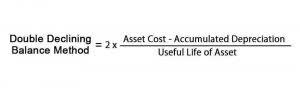
    • You figure the depreciation rate under the 200% DB method by dividing 2 (200%) by 5 (the number of years in the recovery period).
    • Typically the purchase agreement includes the property’s address, final agreed-upon price, the names and signatures of the buyer and seller, and the closing date.

    There are also special rules for determining the basis of MACRS property involved in a like-kind exchange or an involuntary conversion when the property is contained in a general asset account. You make a $20,000 down payment on property and assume the seller’s mortgage of $120,000. Your total cost is $140,000, the cash you paid plus the mortgage you assumed.

    real estate accounting system

    Some companies that are seeing limited effects and challenges with implementation highlighted property operations and management and marketing as being particularly problematic. Smaller, more efficient AI models, with increased sector-specific specializations, seem to be gaining traction across the industry. Most voice and chat assistants are not novelties; they’re often becoming common tools for engaging prospects and qualifying leads.

    real estate accounting system

    Use the applicable convention, as explained in the following discussions. On October 26, 2023, Sandra and Frank Elm, calendar year taxpayers, bought and placed in service in their business a new https://backinsights.com/professional-real-estate-bookkeeping/ item of 7-year property. It cost $39,000 and they elected a section 179 deduction of $24,000.

    real estate accounting system

    Billing and Payments

    It can also integrate with a variety of other software tools commonly used in the real estate industry, such as property management and CRM systems. Whether you’re managing 50 or 5,000 properties, PropertyMe is the cloud-based property management system built to scale. With powerful features for leasing, inspections, maintenance and real estate real estate bookkeeping accounting software — it’s everything you need in one platform. Your team needs real estate accounting software that supports the complexities of the business without compromising on flexibility.

    real estate accounting system

    You may not be able to use MACRS for property you acquired and placed in service after 1986 if any of the situations described below apply. If you cannot use MACRS, the property must be depreciated under the methods discussed in Pub. In chapter 4 for the rules that apply when you dispose of that property.. You cannot depreciate a term interest in property created or acquired after July 27, 1989, for any period during which the remainder interest is held, directly or indirectly, by a person related to you. A term interest in property means a life interest in property, an interest in property for a term of years, or an income interest in a trust. If you are a rent-to-own dealer, you may be able to treat certain property held in your business as depreciable property rather than as inventory.

    • With real-time cash flow insights, Baselane helps landlords stay on top of their financial performance and streamline the often tedious task of property management accounting.
    • Reports can also be run on how long properties have been listed on the market–this is helpful to know if a property isn’t selling well, the value may need to be adjusted.
    • If you do not claim depreciation you are entitled to deduct, you must still reduce the basis of the property by the full amount of depreciation allowable.
    • This is the property’s cost or other basis multiplied by the percentage of business/investment use, reduced by the total amount of any credits and deductions allocable to the property.
    • Most high-end platforms offer a suite of tools designed to handle the entire lifecycle of a real estate transaction.

    Our focus on efficiency and accuracy allows you to concentrate on growing your business and nurturing client relationships. With a commitment to future-proofing your success, we anticipate regulatory shifts and embrace emerging technologies. Partner with Gallagher & Mohan to unlock unparalleled growth potential in real estate accounting.

  • IRS Fresh Start Program: A Lifeline for Business Owners with Tax Debt

    If you’re looking for tax relief services, know that you are not alone and that many Americans are also looking for ways to relieve their tax burden. • The tax relief company can also serve as a tax representative to negotiate with the IRS on your behalf. However, the complicated regulations for filing taxes, the changes every year, and the tax jargon make the process overwhelming for many. American taxpayers will agree that facing the IRS is an intimidating thought and would be the last thing they want to happen. You must make the required tax returns and estimated payments plus an application to ensure eligibility.

    Fresh Start Initiative

    Tax Credits – When all the deductions from a taxable income are made, a tax credit will further reduce the number of remaining taxes. • Tax professionals understand tax laws and can explain the process in a manner that’s easy to understand. • The IRS uses asset seizure and wage garnishment to collect the majority of the taxes they’re owed. This is why qualifying for IRS Fresh Start penalty relief is incredibly helpful. Each day that you fail to pay your tax bill, a good amount of interest and fees is added to the unpaid amount.

    Tax Lien Withdrawal

    • For business owners, that means protecting your assets, cash flow, and reputation while catching up on your federal tax responsibilities.
    • Each day that you fail to pay your tax bill, a good amount of interest and fees is added to the unpaid amount.
    • Solvable is not a licensed insurance agency and does not issue policies or offer insurance advice.
    • To qualify for a multiple installment agreement, taxpayers must demonstrate a significant change in their financial situation—such as a decrease in income or an increase in necessary expenses.
    • If you’re uncertain whether you need help from a tax relief company, many of them offer a free initial consultation to assess your situation.
    • In order to qualify for an IRS Tax Forgiveness Program, you first have to owe the IRS at least $10,000 in back taxes.

    The 2025 tax year has closed and it’s now time to submit 2025 tax returns. The main purpose is to prove that your expenses reduce your income to a level which puts you into a financial crisis. Also, in some of the rarest cases, people are provided with the Interest Abetment service, which allows you to remove the tax interest amount from your bill completely. Also, these companies will only help you lower your penalties on the bills. Nevertheless, there is no guarantee that the company will succeed and IRS will actually accept the offered terms. As a result, the company will help you with an instalment agreement, a penalty relief or in some cases, a compromise.

    As the process continues, the IRS can initiate more serious actions such as wage garnishments, where a portion of the taxpayer’s paycheck is withheld to satisfy the tax debt. To qualify, taxpayers must provide proof of income, expenses, and assets to showcase their demonstrated financial hardship. The following subsections will delve into the specific criteria needed to qualify, covering financial hardship requirements, tax debt limits, and filing compliance.

    To qualify for the IRS Fresh Start Program, taxpayers need to meet specific criteria. Among these initiatives, the Fresh Start program can be particularly valuable for those struggling with tax debt. The IRS assesses billions of dollars in penalties to those who fail to comply with federal tax filing, reporting and payment requirements, and in some cases, the outcomes can also include criminal investigations. Each year, millions of Americans fail to file or pay their federal taxes by the deadline, a decision that can lead to serious — and expensive — penalties. With updated eligibility requirements and expanded relief options in 2025, it offers a practical way for individuals and small businesses to manage and reduce their liabilities.

    The Offer in Compromise (OIC) is one of the relief options provided through the Fresh Start Program. Join us as we explore the ins and outs of the IRS Fresh Start Program, its eligibility requirements, available options, and tax experts’ tips to make the most of it. Whether you’re an individual or a small business owner, understanding this program is crucial in reclaiming your financial freedom. In this blog post, we’ll dive into the IRS Fresh Start Program, a game-changer for those seeking relief from their tax obligations.

    Why choose Ideal Tax?

    This firm has been in business for 10 years and employs tax attorneys who can help you navigate the IRS Fresh Start Program and its’ complexities. Stop IRS Debt is one of the top-rated tax firms in the business, with a BBB rating of A+. Their team of enrolled agents and tax attorneys are pros at negotiating with the IRS and are experienced with the IRS Fresh Start Initiative. Below, we’ve selected our top picks for getting tax assistance under the IRS Fresh Start initiative. For instance, you may be required to disclose confidential financial information, or the IRS may attempt recovery of the unpaid balance any time within the next 10-year period.

    Is Optima Tax Relief Right For You? (Updated

    • With a $251,000 debt owed to the IRS and an installment agreement requiring monthly payments of $3,500, Zorida sought our help.
    • Moreover, most taxpayers find that the process of Penalty Abatement to reduce or eliminate penalties on unpaid taxes is free, contrary to some beliefs.
    • The firm can provide results in as few as three months, and its experienced tax professionals work with taxpayers in all 50 states.
    • You qualify for a fee waiver if your adjusted gross income is at or below 250% of the federal poverty level for your household size.
    • Our diverse team includes tax attorneys, federally licensed enrolled agents, skilled accountants who deal with hundreds of cases every month.
    • In those scenarios, you might look to a tax relief company for help.

    The experts at Justice Tax are dedicated to bringing justice to the taxpayer and the IRS and you can trust them to fight to get you resolution. Community Tax has expertise how can the irs fresh start program help me in releasing tax liens, and can help you get IRS resolution through the IRS Fresh Start program. If you think you qualify for the IRS Fresh Start program, reach out to the experts at Anthem Tax Services These 5 companies are experienced at negotiating with the IRS and could help you save on your back taxes.

    Consult with a licensed financial or tax professional to determine what’s best for your situation. We encourage you to review each provider’s terms and consult with a financial advisor or tax professional before accepting any loan offer. The firm can provide results in as few as three months, and its experienced tax professionals work with taxpayers in all 50 states. If you’re looking for a tax attorney with an excellent record, extensive experience, and generous payment policies, Community Tax could be the right choice for you. A settlement under the IRS Fresh Start Initiative does not absolve you of your responsibility for paying taxes in the future.

    Solvable does not include all business loan providers or offers available in the marketplace. Some of the business loan offers featured on Solvable are from companies or affiliates that may compensate us. Some of the credit card offers featured on Solvable are from companies or affiliates that may compensate us. You should carefully review each provider’s terms and conditions to find the option that best fits your financial situation. Solvable does not include every personal loan provider or all available offers in the marketplace.

    Currently Non-Collectible Status

    Solvable is not a lender or creditor and does not originate or fund loans, nor can we alter or offer credit terms. Solvable does not include all student loan companies or all available refinancing options in the marketplace. Traditional bank and SBA loans often require collateral and have more extensive approval processes.

    Tax filing

    If you’re unsure about your best course of action, consider consulting with a tax professional, especially if your business finances are complex. For business owners, that means protecting your assets, cash flow, and reputation while catching up on your federal tax responsibilities. This program is designed to help you catch up without losing control of your finances. Automate extracting, validating, and organizing client tax data.

    If your back tax is over $10,000, you must pay the installments through direct debit. However, you must be sure to make the payment every month without missing any installment. If you fail to pay your taxes on time, the IRS may place a legal claim against your assets.

    Long-term payment plans (installment agreements)

    There are lenders in the market who check public reports and records for your unpaid taxes. Though, this does not mean your unpaid taxes will not decrease your future chances of getting loans. Gratefully, unpaid taxes do not affect your credit score anymore and they do not appear on your credit reports as well.

    Their expertise can help you navigate the complexities of IRS policies and identify the most suitable solution for your situation. If you’re unsure about your eligibility or the best course of action, consider consulting with a tax professional. If you’re unsure whether the Fresh Start Program is the right fit for you, reaching out to a tax expert might be a good move. With the help of a Community Tax expert on your side, we expedite the process so you can get your Fresh Start as soon as possible.

    Offer in Compromise is a negotiation between the IRS and an individual who struggles to pay their tax liability in full or will experience financial hardship in doing so. Long-term plans have fees and the maximum is $50,000 including combined taxes, interest, and penalties. Short-term tax relief spans up to 120 days while long-term plans go over 120 days.

  • Cost-Volume-Profit Analysis CVP: Definition and Formula Explained

    Managers frequently use CVP to estimate the level of sales that will allow the company to make a particular profit, called targeted income. CVP analysis is also used when a company is trying to determine what level of sales is necessary to reach a specific level of income, also called targeted income. Using a variation of the CVP, management can calculate the break-even point in profits, units, and even dollars. For example, a bike factory would classify bicycle tire costs as a variable cost. These costs include materials and labor that go into each unit produced. Variable costs, on the other hand, change with the levels of production.

    A higher CMR means that more of each sales dollar contributes to covering fixed costs and generating profit. Once the contribution margin per unit is known, managers can calculate the break-even point or determine the sales volume needed to achieve a target profit. The contribution margin only considers a businesses variable costs.

    In business or finance, CVP means Cost Volume Profit. If you’re looking for the business or finance term that CVP stands for, you’ve come to the right place. The Accounting Tutor has a great resource for CVP and break even analysis. Are you looking for more business advice on everything from starting a new business to new business practices?

    On a separate note, according to industry experts, real-time CVP analysis was crucial during COVID-19, particularly in industries such as hotels, just to keep the lights on. At one point, the company’s founder was so busy producing small pizzas he did not have time to determine that the company was losing money on them. Cost Volume Profit (CVP) analysis and break-even analysis are sometimes used interchangeably, but in reality, they differ because break-even analysis is a subset of CVP. This shift toward strategic planning reflects the growing complexity of financial decision-making in volatile markets. Financial planning and analysis (FP&A) leaders commonly apply CVP to break-even analysis.

    Premium Investing Services

    I had a client who worked for a telecom company, and the trucking industry was one of her target clients. So, when you meet with a potential customer, you must be prepared to sell them on your product or service — and position yourself as cvp meaning in business a trusted advisor. They’ve done their research, they know all about your product or service, and they’ve looked at the competition.

    • This shift reflects a move away from manual processes that increase error risks, particularly in complex multi-product scenarios.
    • Knowing the difference between the two helps you see how changes in production affect your bottom line.
    • It helps determine the minimum sales volume needed to cover costs.
    • The break-even point is the sales volume at which total revenues equal total costs, resulting in zero profit.
    • Using CVP, managers can also estimate how changes in the costs of their products or volume of products affect the company’s profits.
    • CVP analysis becomes particularly complex and insightful when applied to companies offering multiple products or services.

    The cost of goods sold includes every cost – both fixed costs and variable costs. You might calculate the contribution margin income statement to show the separation of your fixed and variable costs. Once fixed costs are covered, the next dollar of sales results in the company having income. For instance, if Company X had $750,000 in sales, and $450,000 in variable costs, it has a contribution margin of $300,000. To calculate contribution margin, managers must subtract variable costs from sales.

    17: Cost-Volume-Profit Analysis

    • These assumptions make CVP most effective for short-term and single-product decision-making.
    • The degree of operating leverage (DOL) measures the sensitivity of a company’s profits to changes in volume.
    • Gartner’s December 2024 finance survey found that three-quarters of respondents are more focused on downside risk and cost containment in their scenario planning for 2025 budgets.
    • It is a subset of CVP analysis focused on finding a situation where total revenue equals total costs, resulting in zero profit or loss.
    • Whether setting prices, controlling costs, or budgeting production levels, the CVP analysis is an indispensable tool for profit-focused management.

    Cost-Volume-Profit (CVP) examines the relationships between sales, costs, and profits. It is a fundamental part of financial planning and analysis that maps the relationship between fixed and variable expenses. Further, assumptions made surrounding the treatment of semi-variable costs could be inaccurate. In conjunction with other types of financial analysis, leaders use this to set short-term goals that will be used to achieve operating and profitability targets. This is the point of production where sales revenue will cover production costs. The point where the total costs line crosses the total sales line represents the break-even point.

    The Products

    The contribution margin ratio is determined by dividing the contribution margin by total sales. Fixed costs are unlikely to stay constant as output increases beyond a certain range of activity. CVP simplifies the computation of breakeven in break-even analysis, and more generally allows simple computation of target income sales.

    Loop in stakeholders from operations, sales, procurement, and marketing to ensure assumptions reflect on-the-ground realities. CVP analysis benefits from diverse perspectives. Incomplete cost models can skew your results. Effective CVP analysis involves more than crunching numbers. CVP enables FP&A teams to proactively test different cost or pricing scenarios, calculate margin compression risks, and design mitigation strategies.

    Calculating Breakeven With the CVP Formula

    Tracking this metric over time shows how changes in fixed costs, pricing, and variable costs impact profitability. Cost-volume-profit (CVP) analysis is an important financial modeling tool used to understand the relationships between costs, sales volume, and profit. Cost-volume-profit (CVP) analysis is a financial modeling tool used to understand how changes in costs and volume affect a company’s profitability.

    Want to know how much you need to sell to achieve a specific profit? What’s the impact of cost increases on our bottom line? In this post, we’ll explore CVP analysis in detail, covering its purpose, components, formulas, assumptions, practical examples, and limitations.

    Cost accountants and management analyze these trends in an effort to predict what costs, sales, and profits the company will have in the future. Fixed costs are expenses that don’t fluctuate directly with the volume of units produced. The CVP analysis classifies all costs as either fixed or variable. Conversely, the analysis could show that raising prices above a certain threshold leads to reduced sales without sufficiently higher margins to maintain profitability.

    How do you calculate CVP analysis?

    Below is a break down of subject weightings in the FMVA® financial analyst program. The hardest part in these situations involves determining how these changes will affect sales patterns – will sales remain relatively similar, will they go up, or will they go down? In this decision-making scenario, companies can easily use the numbers from the CVP analysis to determine the best answer. More specifically, the number 5 means that a 1% change in sales will cause a magnified 5% change in net income.

    CVP Analysis Tools and Concepts (With Formulas)

    The primary goal of CVP analysis is to identify the breakeven point, which is the point where the revenue from sales is equal to the total costs. This visual line chart tells your story clearly outlining revenue, fixed costs, and total expenses, and the breakeven point. By modeling multiple scenarios with different fixed and variable cost assumptions, CFOs can develop contingency plans and identify which cost drivers have the greatest impact on profitability. For FP&A leaders, this cost accounting method can show executives the margin of safety or the risk the company is exposed to if sales volumes decline. It’s a clear and visual way to tell your company’s story and the effects when changing selling prices, costs, and volume. It helps determine the minimum sales volume needed to cover costs.

    UX refers to the overall experience a user has while interacting with a product, service, or system. Online payment refers to the use of electronic methods to facilitate financial transactions over the internet. Digital marketing refers to the use of digital channels such as social media, search engines, email, and mobile devices to promote products or services.

    The contribution margin represents the portion of sales revenue available to cover fixed costs and, after fixed costs are covered, to generate profit. At its core, CVP analysis is based on the contribution margin concept—sales revenue minus variable costs. So basically, the contribution margin shows the portion of sales that go towards covering the company’s fixed costs.

    When we analyze CVP is where we demonstrate the point at which in a firm there will be no profit nor loss means that firm works in breakeven situation It simplifies analysis of short run trade-offs in operational decisions. Costs and sales can be broken down, which provide further insight into operations. Profit is computed as TR-TC; https://ssamayaspabali.com/2024/08/08/the-extension-deadline-is-coming-up-avoid-bad/ it is a profit if positive, a loss if negative. CVP analysis employs the same basic assumptions as in breakeven analysis.

  • credit verb Definition, pictures, pronunciation and usage notes

    Chase offers a variety of business savings accounts taxpayer relief act of 1997 definition including Total Savings, Premier Savings and a business CD. Accept debit and credit cards with convenient payment solutions wherever you do business. Chase offers a variety of business checking accounts for small, mid-sized and large businesses.

    In addition, instead of using negative and positive numbers, we record our transactions in terms of left and right—that is, on the left or right side of a record—which in double-entry bookkeeping are called debit and credit. Double-entry bookkeeping is the foundation of accounting. Debits and credits are not used in a single entry system. Thus, in a sense, you can only have assets if you have paid for them with liabilities or equity, so you must have one in order to have the other.

    Think of these as individual buckets full of money representing each aspect of your company. Credits (cr) record money that flows out of an account. And why is any of this important for your business? I could have made decisions for my business that would not have turned out well, should they have not been made based on the numbers.” “Working with Bench has saved me so many times.

    To illustrate this, consider a business that pays $10,000 for employee salaries. This amount will be recorded as wages payable until it’s paid to the employees. This account represents the wages or salaries owed to employees that have been earned but not yet paid.

    Gain accounts record profits earned from transactions other than normal business operations. Journal entries are used to update the general ledger accounts and form the foundation for financial statements. Credits are rarely used for expenses, but they might be useful in exceptional circumstances, such as reversing an incorrectly recorded expense. Debits are typically used to decrease revenue accounts, although this is rare and often related to returns or customer allowances. Equity represents the ownership claim on the business’s assets, essentially what’s left after subtracting all liabilities (debts) from the total assets. On the other hand, credits signify activities that increase liabilities, like borrowing money.

    • To decrease an account you do the opposite of what was done to increase the account.
    • This creates an asset (accounts receivable) and increases equity through earned revenue.
    • Under this system, your entire business is organized into individual accounts.
    • This is because the insurance coverage provides future economic benefits to the business, similar to other assets.
    • Free programs frequently limit the amount of revenue you can make before upgrading to a paid tier.
    • The bank’s detailed records show that Debris Disposal’s checking account is the specific liability that increased.

    For example, you debit the purchase of a new computer by entering it on the left side of your asset account. A debit (DR) is an entry made on the left side of an account. Part of your role as a business is recording transactions in your small business accounting books.

    Why is it that debiting some accounts makes them go up, but debiting other accounts makes them go down? What exactly does it mean to “debit” and “credit” an account? Bench simplifies your small business accounting by combining intuitive software that automates the busywork with real, professional human support. Simple inventory and accounting software for your small, medium, or large business This is because the insurance coverage provides future economic benefits to the business, similar to other assets. For example, you generated $10,000 in revenue and incurred $7,000 in expenses.

    A debit is commonly abbreviated as dr. in an accounting transaction, while a credit is abbreviated as cr. If you are really confused by these issues, then just remember that debits always go in the left column, and credits always go in the right column. For example, if you debit a cash account, then this means that the amount of cash on hand increases.

    Point of Sale

    This equation reflects that everything a company owns (assets) is either financed by borrowing (liabilities) or by investments from owners (equity). While “debit” and “credit” may evoke thoughts of everyday banking products like debit and credit cards, their role is more sophisticated in accounting. These withdrawals are recorded as debits, because they decrease equity. If the account is a liability or equity, it’s on the https://tax-tips.org/taxpayer-relief-act-of-1997-definition/ right side of the equation; thus it would be increased by a credit. That is, if the account is an asset, it’s on the left side of the equation; thus it would be increased by a debit. In the double-entry system, every transaction affects at least two accounts, and sometimes more.

    By accurately tracking expenses using debit entries, businesses can maintain a clear picture of their financial situation and make informed decisions about their operations. For instance, if a company pays $10,000 in salaries to its employees, it would debit salaries expense by $10,000 and credit cash by $10,000. A debit entry is made to increase the expense account, reflecting the cost being used or paid. To accurately track expenses, it’s essential to understand how expenses are recorded in the accounting system. Note that credits are rarely used for expenses, but they might be useful in exceptional circumstances, such as reversing an incorrectly recorded expense. For instance, if you pay your employees $8,000 in salaries, you’d debit the salary expense account by $8,000 and credit the cash account by $8,000.

    How do you know if an account should be debited or credited?

    • By embracing the right tools and practices, you can guarantee that your business’s financial health is always in check, paving the way for growth and success.
    • The processing time for accounting documents has been noticeably reduced, in certain cases even from 2 days to only 5 hours.
    • These back-office functions can be done manually, but that takes time and effort and increases the odds of human error.
    • Since the loss is outside of the main activity of a business, it is reported as a nonoperating or other loss.
    • This type of transaction is typically recorded on the right side of a journal.
    • For instance, if you pay $500 for your monthly rent, you would debit rent expense by $500.

    Experience true speed, reduced data entry, smart AI, and a fast UI. Imagine a vast collection of business apps at your disposal. The modern usage of ‘crediting’ captures the essential practice of acknowledging contributions across varied fields, including literature, art, and science. By the late 19th century, it became common in academic contexts, where scholars were urged to credit their sources to uphold integrity and avoid plagiarism. The term ‘credit’ originates from the Latin word ‘credere’, meaning ‘to believe’ or ‘to trust’.

    What Are Expense Accounts?

    In this case, we’re crediting a bucket, but the value of the bucket is increasing. In this case, it increases by $600 (the value of the chair). Your “furniture” bucket, which represents the total value of all the furniture your company owns, also changes.

    Interest Income

    Debits are primarily used to increase expense accounts, reflecting the cost being used or paid, as seen in Example 1 and Example 3. Recording expenses is a crucial aspect of accounting, and it’s essential to understand how to record them correctly. Expense accounts are a crucial part of any business’s financial record-keeping. Debit expense accounts are typically used for expenses that are directly related to the production or sale of goods or services, such as direct labor and materials.

    For example, if you pay $1,200 for annual insurance coverage, you’ll record that as an asset initially and then expense a portion of it each month. Paid $700 for monthly insurance premiums, which is a typical expense that needs to be recorded. Recording insurance expenses can be a bit tricky, but it’s essential to get it right. They track the costs of operations that a business incurs to generate revenues.

    What is Cash Flow and How Can You Effectively Manage It?

    For all other accounts—liability, equity, and revenue—credits cause an increase. A simple way is to remember that debits increase asset and expense accounts. Credits increase liability, equity, and revenue accounts, while debits decrease them. Debits increase asset and expense accounts, while credits decrease them. Calculating account balances requires adding up all debits and credits for each account, then finding the difference. Many people use acronyms to remember which accounts are increased by debits and which by credits.

    Debits are increases to asset accounts, which means they represent the resources that a business owns. This means that if a debit increases an asset, a corresponding credit must decrease a liability or equity. In each business transaction, the total dollar amount of debits must equal the total dollar amount of credits. The total dollar amount of debits must equal the total dollar amount of credits in each business transaction. For example, if you debit the purchase of a new computer, you would credit the decrease in cash, which is an asset account. Have a firm grasp of how debits and credits work to keep your books error-free.

    This is the opposite of when you record revenue, where you’re increasing an asset and decreasing a revenue account. This is because the salary expense increases, and the cash decreases. This is crucial for accurately tracking expenses and ensuring that the financial records are up-to-date.

  • S corporation stock and debt basis Internal Revenue Service

    c corporation definition

    Foreign-operating corporations may access specialized deductions like Foreign-Derived Intangible Income (FDII). C corps face a unique tax structure that impacts overall business profitability. Its taxation involves multiple layers, available deductions, and strategic opportunities that business owners In-House Accounting vs. Outsourcing must navigate to optimize their tax position.

    C corporation tax laws

    They provide many of the same protections as a C Corp, but have less formal rules on taxation, governance, and compliance. If you’re registering as any of these entities, you’ll most likely have similar requirements to get started. For example, every business will need to file Articles of Incorporation and get a registered agent. Most of the differences between entities are more noticeable once you get up and running.One of the most significant differences between forming C Corps and S Corps/LLCs is how income is taxed. While shareholders bear the ultimate financial risk, they benefit from the limited liability protection that C corps provide, shielding their personal assets from company debts and legal obligations. Anna registered Company A as a C Corp and filed articles of incorporation with the Secretary of State.

    • Most venture capital firms will only invest in Delaware C corporations.
    • You should check the governing statute and the bylaws to see the percentage vote required.
    • In which owners pay income tax on the income they draw from the business.
    • Even if shareholders sell their shares or pass away, the company can continue operations.
    • For instance, if two people own a C corp together and one decides to leave, they can sell their shares without closing the business.
    • First, the corporation pays federal income tax on profits at a flat 21% rate.

    What Is a C Corp? Definition, Taxes, and How to File

    c corporation definition

    While both entities share structural similarities, the difference between S corporations and C corporations lies in their tax treatment, ownership limits, and flexibility. Sole proprietorships are single-owner businesses that are simple to set up and run, with minimal administrative requirements. Owners of sole proprietors also have full control over the business, compared to shareholders in a C corp. Since C corps exist as their own entities, they’re not tied to specific owners.

    Key components and structure

    This structure allows for an unlimited number of shareholders and multiple classes of stock, providing flexibility for raising capital. However, it also faces double taxation on income and dividends, which business owners must consider. The C-Corp tax status is the standard format when forming a corporation. However, c corporation definition the corporation can elect for S-Corp tax status by making an additional filing (form 2553) directly with the IRS. S-Corps are pass-through entities, meaning the profits and losses will pass through the business, instead reported on the owner’s personal tax returns.

    c corporation definition

    Quarterly estimated tax payments

    • Shareholders elect a board of directors to oversee major decisions and set policy.
    • The private equity or venture capital firm serves as the general partner and actively manages the investments into companies.
    • While the C Corp is a well-known business structure, there are other options for entrepreneurs who are forming small businesses in the U.S.
    • Shareholders own the corporation, directors provide oversight and strategic guidance, while officers handle day-to-day operations.
    • There are no restrictions on ownership in a C corporation – you can have as many owners as you want, and foreign nationals can own shares in a C corporation.
    • If the corporation goes bankrupt, the owners will lose the money they paid for their shares.

    Without issuing shares, non-stock corporations may instead have members who participate in organizational governance. Finally, the C Corporations must obtain an Employer Identification Number (EIN). Thus, they must file Form SS-4 or submit the https://theorangestreet.com/2024/01/25/illinois-football-vs-northwestern-recap-game-score/ EIN application at the Internal Revenue Service’s official website.

    • Following state approval, the newly formed corporation must obtain a federal Employer Identification Number (EIN) from the IRS.
    • The chief benefit of forming a C corp is selling an unlimited number of shares.
    • That is, there should be a contract with a stated interest rate, a specified length of time for repayment, and a consequence for failure to repay the loan.
    • With a separate legal identity, C corps can enter into contracts, sue, and be sued.
    • However, companies that exceed certain asset and shareholder limits must register with the US Securities and Exchange Commission.